Why Become a vegan?
This is the statement from the Vegan society, which I feel covers most aspects. I will however, be covering all these reasons in more depth in the near future.
 More and more people are turning to a vegan diet for the health benefits: increased energy, younger looking skin and eternal youth are just some of the claims from enthusiastic plant eaters. Well, eternal youth might be a bit optimistic, but there are certainly many scientifically proven benefits to vegan living when compared to the average western diet.
Well-planned plant-based diets are rich in protein, iron, calcium and other essential vitamins and minerals. The plant-based sources of these nutrients tend to be low in saturated fat, high in fibre and packed with antioxidants, helping mitigate some of the modern world's biggest health issues like obesity, heart disease, diabetes and cancer.
More and more people are turning to a vegan diet for the health benefits: increased energy, younger looking skin and eternal youth are just some of the claims from enthusiastic plant eaters. Well, eternal youth might be a bit optimistic, but there are certainly many scientifically proven benefits to vegan living when compared to the average western diet.
Well-planned plant-based diets are rich in protein, iron, calcium and other essential vitamins and minerals. The plant-based sources of these nutrients tend to be low in saturated fat, high in fibre and packed with antioxidants, helping mitigate some of the modern world's biggest health issues like obesity, heart disease, diabetes and cancer. From recycling our household rubbish to cycling to work, we're all aware of ways to live a
greener life. One of the most effective things an individual can do to lower their carbon
footprint is to avoid all animal products. This goes way beyond the problem of cow flatulence!
From recycling our household rubbish to cycling to work, we're all aware of ways to live a
greener life. One of the most effective things an individual can do to lower their carbon
footprint is to avoid all animal products. This goes way beyond the problem of cow flatulence!
Why is meat and dairy so bad for the environment?
The production of meat and other animal products places a heavy burden on the environment - from crops and water required to feed the animals, to the transport and other processes involved from farm to fork. The vast amount of grain feed required for meat production is a significant contributor to deforestation, habitat loss and species extinction. In Brazil alone, the equivalent of 5.6 million acres of land is used to grow soya beans for animals in Europe. This land contributes to developing world malnutrition by driving impoverished populations to grow cash crops for animal feed, rather than food for themselves. On the other hand, considerably lower quantities of crops and water are required to sustain a vegan diet, making the switch to veganism one of the easiest, most enjoyable and most effective ways to reduce our impact on the environment.
 Just like veganism is the sustainable option when it comes to looking after our planet, plant-
based living is also a more sustainable way of feeding the human family. A plant-based diet
requires only one third of the land needed to support a meat and dairy diet. With rising global
food and water insecurity due to a myriad of environmental and socio-economic problems, there's
never been a better time to adopt a more sustainable way of living. Avoiding animal products is not just one of the simplest ways an individual can reduce the strain on food as well as other
resources, it's the simplest way to take a stand against inefficient food systems which
disproportionately affects the poorest people all over the world.
Just like veganism is the sustainable option when it comes to looking after our planet, plant-
based living is also a more sustainable way of feeding the human family. A plant-based diet
requires only one third of the land needed to support a meat and dairy diet. With rising global
food and water insecurity due to a myriad of environmental and socio-economic problems, there's
never been a better time to adopt a more sustainable way of living. Avoiding animal products is not just one of the simplest ways an individual can reduce the strain on food as well as other
resources, it's the simplest way to take a stand against inefficient food systems which
disproportionately affects the poorest people all over the world. 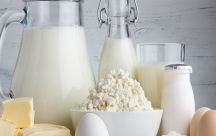
The suffering caused by the dairy and egg industry is possibly less well publicised than the plight of factory farmed animals. The production of dairy products necessitates the death of countless male calves that are of no use to the dairy farmer, as well as the premature death of cows slaughtered when their milk production decreases. Similarly, in the egg industry, even 'ethical' or 'free range' eggs involve the killing of the 'unnecessary' male chicks when just a day old.